Tuesday, 9 July 2013

Cuttlefish

Scientific name: Sepiida
Habitat: Near coral reefs
Diet: Small Fish, Crabs and lobsters
Predators: Sharks and big Fish
Rank in food chain: Consumer
Type of water it lives in: Saltwater
Size: 1-5 feet
Class: Mollusks
Relatives: Octopus and Squid
 
Fact: Cuttlefish are marine animals of the order Sepiida. They belong to the class Cephalopoda, which also includes squid, octopuses, and nautiluses. 'Cuttle' is a reference to their unique internal shell, the cuttlebone. Despite their name, cuttlefish are true molluscs.
Cuttlefish have large, W-shaped pupils, eight arms, and two tentacles furnished with denticulated suckers, with which they secure their prey. They generally range in size from 15 to 25 cm (5.9 to 9.8 in), with the largest species, Sepia apama, reaching 50 cm (20 in) in mantle length and over 10.5 kg (23 lb.) in weight.
Cuttlefish eat small molluscs, crabs, shrimp, fish, octopuses, worms, and other cuttlefish. Their predators include dolphins, sharks, fish, seals, seabirds, and other cuttlefish. Their life expectancy is about one to two years. Recent studies indicate cuttlefish are among the most intelligent invertebrates.Cuttlefish also have one of the largest brain-to-body size ratios of all invertebrates.[2]
The 'cuttle' in 'cuttlefish' comes from the Old English word cudele, meaning 'cuttlefish', which may be cognate with the Old Norse koddi ('cushion') and the Middle Low German küdel ('pouch').The Greco-Roman world valued the cephalopod as a source of the unique brown pigment the creature releases from its siphon when it is alarmed. The word for it in both Greek and Latin, sepia, is now used to refer to a brown pigment in English.

Sunday, 7 July 2013

Reef Sharks


Reef Shark

Scientific name: Carcharhinus melanopterus
Habitat: Near coral reefs
Diet: Small Fishes, Crabs and Lobsters, reef fish, squid, cephalopods and shrimp
Predators: Bigger Sharks, Killer whales and Octopus
Rank in food chain: Consumer
Type of water it lives in: Saltwater
Size: 1/2 mtrs
Relatives: White tip reef shark and grey reef sharks


Reef sharks inhabit tropical waters and lagoons near coral reefs. They are found in Indo-Pacific waters and the Caribbean. Like all sharks, reef sharks are efficient predators. They are at the apex of their food chains and are therefore an important indicator species for marine ecosystems as a whole.


Reproduction All reef sharks are viviparous - they give birth to live pups, with an average of 1-5 pups per litter. Gestation periods can be longer than 1 year, and the pups do not reach maturity until at least the age of 5.

What are the main threats to Reef sharks?

Slow reproduction rates and a limited habitat makes reef sharks particularly vulnerable to both commercial and artisanal fishing. They are often caught as by catch and discarded, making a true assessment of population status difficult.
Watch a video of Reef Shark Here:
https://www.youtube.com/watch?v=ejguPpeVK-k


Killer whale

Killer whale

Scientific name: Orcinus orca

Habitat: All oceans
Diet: Sharks, Octopuses, Fishes (big - Small), Squid, Crabs, Seals, Sea lions, Penguins and Turtles
Predators: Humans
Rank in the food chain: Top predators
Type of water it lives in: Saltwater
Biggest type of dolphin: Killer whale
Smallest type of dolphin: Maui's dolphin
Size: 10 mtrs
Did you know: Delphinus orca was the earliest name for the killer whale. It meant demon dolphin.
Class: Mammals

Icefish


Icefish

Scientific name: Notothenioidei

Habitat: Atlantic ocean
Diet: Krill and Plankton
Predators: Polar Bear, Dolphins and big Fishes
Rank in food chain: Consumers
Type of water it lives in: Saltwater
Size: 10 Inches-50 inches
Relatives: Mackerel Icefish and Mackerel
Class: Fish

Ocean animals-2 Octopus

Octopus

Scientific name: Octopoda

Habitat: All over the world

Diet: Crabs, Squids, Plankton and small Fish
Predators: Sharks, Whales, bigger Octopuses and bigger Fish
Special Abilities: Some octopuses squirt ink like the squid and all the octopuses can change color very fast
Rank in the food chain: Secondary consumers  
Type of water it lives in: saltwater
Biggest type of Octopus: Enteroctopus
Smallest type of octopus: Wolfi
Size: 1/2 feet-7mtrs
Did you know: Octopuses are thought to be the most intelligent animals without a back bone, or invertebrates. They can recognize various shapes and said to be have a good memory. They can even plan and open the lid of a jar.   

Relatives: Cuttlefish and squid
Class: Mollusks

An octopus is a sea animal with eight arms. There are more than 150 species, or types, of octopus. They belong to the group of animals called Mollusks, which also includes squid, clams, and oysters. Octopuses live in seas throughout the world.

An octopus has a soft, baglike body and large eyes. Its long, slender arms reach out in all directions. Each arm has two rows of cuplike suckers with great holding power.

Octopuses vary greatly in size. The smallest are only about 2 inches (5 centimeters) long. The largest may be 18 feet (5.5 meters) long and have a 30-foot (9-meter) arm span.

An octopus can change color quickly depending on its surroundings or its mood. It can be gray, brown, pink, blue, green, or even an angry red if it is suddenly frightened.

An octopus usually crawls along the ocean bottom on its arms searching for food. It eats mainly crabs and lobsters. Skillful hunters, octopuses also attack large prey such as sharks. If an octopus is in danger, it shoots a jet of water out of its body. This moves the octopus backward very quickly. An octopus also may release an inky fluid to darken the water and confuse an enemy.

A female octopus lays her eggs under rocks or in holes. She guards the eggs for four to eight weeks. Upon hatching, the young drift for several weeks before going to the ocean bottom
This video has been taken by me @ CineAqua, Paris, France. 

Saturday, 6 July 2013

Mughal Emporor 3-Akbar The Great


 Akbar-Jodha

Abu'l-Fath Jalal ud-din Muhammad Akbar
 
Born on October 15, 1542 in Umarkot, India, and enthroned at age 14, Akbar the Great began his military conquests under the tutelage of a regent before claiming imperial power and expanding the Mughal Empire. Known as much for his inclusive leadership style as for his war mongering, Akbar ushered in an era of religious tolerance and appreciation for the arts. Akbar the Great died in 1605

Date of birth:14 Oct 1542

Date of death: 27 October 1605
5-10-27)
Ruling period: 50 years

Battles fought: More than 100

Main achievements: Finding a new cast, Ruling 1/4 of Asia

Life period:  63 years

Successor: Jahangir

Grandson: Shah Jahan

Akbar's father: Humayun

Akbar's mother: Hamida Banu Begum

 Biography: Akbarnama and Ain-I-akbari


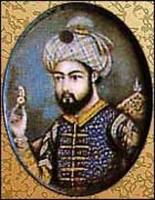
The Mughal emporors-2 Humayun


Humayun

Nasir ud-din Muhammad Humayun

Flag of the Mughal Empire.svg 2nd Mugal Emperor

Nasiruddin Humayun was the son of Babar. He belonged to Mughal dynasty and was the ruler of Afghanistan, Pakistan and Northeastern part of India from 1530-1540 and again from 1555-1556. He succeeded his father, Babur, as a ruler of India in 1530, while his half brother Kamran Mirza got the territories of Kabul and Lahore. Upon his accession to the throne, Humayun had two main rivals namely Sultan Bahadur of East and Sher Shah Suri.
 
Sher Shah ruled India from 1540-1545, he died in 1545, and his son succeeded him to the throne, but he was a weak ruler, and he too died in 1554. With his death the empire began to disintegrate and Humayun, sensing the opportunity sent an army under the leadership of his able General Bairam Khan. Bairam Khan was successful in getting the control of Delhi along with other areas. Humayun set on the throne of Delhi once again on 23rd July 1555. But his period of happiness was short lived, just six months after the ceremonial accession to the throne of Delhi, Humayun met with an accident in his library and died three days later on 25th February 1556. He was succeeded by his son Akbar.
 
 
Date of birth: 17 Mar 1508
Date of death: 27 Jan 1556
Ruling period: 11 years
Battles fought: 22 battles
Main achievements:
Life period: 47 years
Places Babur ruled: Afghanistan, Pakistan and Northeastern part of India
Successor: Muhammad Zalaludin Akbar
Grandson: Jahangir
Humayun's father: Babur
Humayun's mother: Maham begum
Autobiography: Humayun-nama